

Google Ads or Facebook Advertising?
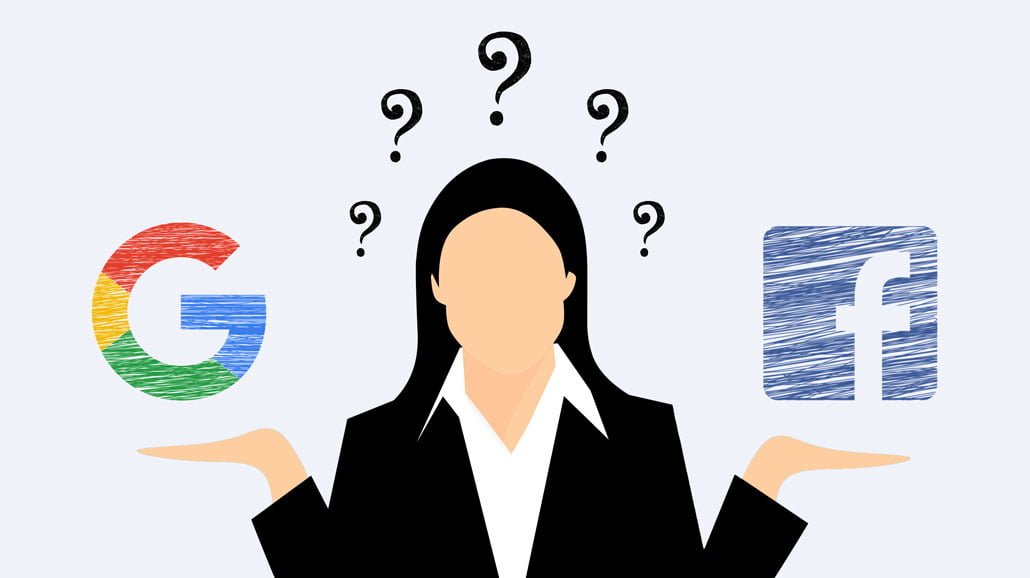
Table of Contents
Should I advertise on Facebook? Or on Google Ads? Maybe both? These are questions we hear at Vendi.Digital practically every day. The answer is often short: “It depends” or “Both.” Each platform has its own strengths and weaknesses, and the ideal choice depends on what you want to achieve with your advertising. As a general rule, Google Ads advertising is more suitable for increasing inquiries and driving sales, while Facebook advertising is better for building brand awareness and educating your target audience.
In this article, we will explain the differences between both platforms in detail, help you understand when each one is more appropriate, and why the best choice is often a combination of both.
What Is Google Ads Advertising?
Google AdWords, as the platform was once called, is known today as Google Ads. It is one of the most popular online advertising platforms in the world. You can read more about our services in this area on the Google Ads advertising page.
Google Ads operates on a PPC (pay-per-click) model. This means you only pay when someone actually clicks on your ad. This brings two key advantages:
- You only pay per click – your budget is not spent on impressions, but only on actual visits.
- Enormous reach – Google processes thousands of searches per second, which means you can reach thousands of users who are actively looking for your products or services.
The Pull Effect and Google Ads
One of the biggest advantages of Google advertising is the so-called “pull effect.” Users who search on Google already know what they are looking for. They have a specific intent – whether they want to buy a product, find a service, or get information about a particular topic.
When your ad matches their search keywords, it acts like a magnet that “pulls” users toward your product or service. This is exactly why Google Ads is extremely effective for increasing inquiries and sales. Users are already in the buying process – you simply show them the right offer at the right time.
Google Advertising Example
Imagine someone types “website redesign” into Google. This person is actively looking for a provider to help them with a redesign. If you are a web services provider, you want your ad to appear on the first page of search results – right where the user is actually looking.
Google Ads allows you to do exactly that: targeted advertising that shows your ad to precisely those users who are searching for your services. In addition to classic search advertising, Google Ads also includes YouTube, which opens up additional opportunities for video advertising and reaching audiences in a completely different way.
Targeting Buyers on Google
Targeting on Google is based on two main pillars: keywords and location. When you set up a campaign, you specify which search terms you want your ad to appear for and the geographic area where you want to advertise.
But effective targeting is much more than just choosing keywords. It is also important to understand negative keywords – terms for which you do not want your ad to appear. You also need to understand keyword match types (broad match, phrase match, exact match) and set them up correctly.
Understanding consumer psychology is also key. What intent does a user have when they type a particular search term? Are they researching, comparing, or ready to buy? Understanding these nuances helps you create ads that speak to the right users at the right moment.
What Is Facebook Advertising?
Facebook advertising stands out for its extremely precise interest group targeting. Facebook has an enormous amount of data about its users, which enables micro-targeting across a wide range of criteria: age, gender, location, interests, browsing behavior, purchasing habits, and much more.
This means you can show your ad to a very narrowly defined group of people who match the profile of your ideal customer.
The Push Effect on Facebook
Unlike Google Ads, where users actively search for your products or services, users on Facebook are in a completely different mode. They are browsing news, looking at friends’ photos, sharing content – they are not in search mode.
That is why Facebook advertising works on the principle of the “push effect.” You have to “push” content in front of users and convince them that it is relevant and interesting. The user was not looking for your product – you showed it to them.
This is exactly why Facebook advertising is excellent for building brand awareness and educating your audience. You show people your product or service before they even know they need it.
Facebook Advertising Example
Facebook advertising offers extremely advanced targeting techniques. You can read more about our services in this area on the Facebook and Instagram advertising page.
Facebook uses cookies to track user behavior online, which enables even more precise targeting. Your ads are shown to people who have not actively searched for your services – but who match the profile of your target audience.
It is important to know that Facebook also owns Instagram, Messenger, and WhatsApp. This means that with one platform, you can advertise across multiple social networks simultaneously, reaching a wider audience across different channels.
The 4 Key Comparisons
Let us look at four key comparisons between Google Ads and Facebook advertising.

1. Cost
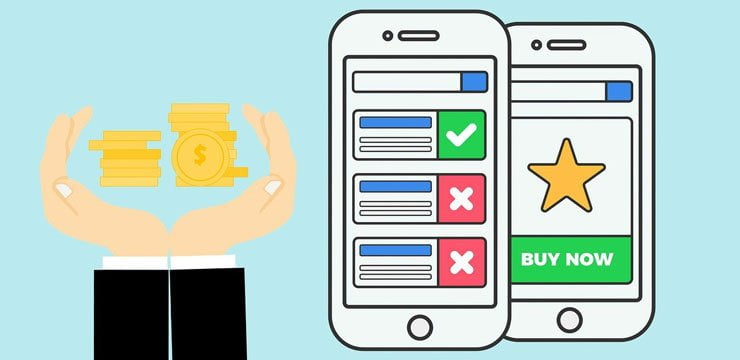
How much does advertising on Google or Facebook cost? The answer depends on your budget, industry, competition, and goals. The good news is that you can start with a minimal budget – theoretically even with 10 euros.
However, it is important to emphasize that a low budget does not necessarily mean poor results, and a high budget does not guarantee success. The key is knowing what you are doing. Poorly configured campaigns can quickly burn through your budget without any measurable results.
If you are not sure how to approach advertising, we recommend turning to experts. At Vendi.Digital, we help you set up campaigns that deliver results.
2. Getting Started
How to Start with Facebook Advertising?
Before you even begin advertising on Facebook, it is important to check the state of your Facebook page. How often do you post? How many followers do you have? What is the engagement on your posts? Does your page look professional and trustworthy?
All of this affects the effectiveness of your ads. Users who see your ad will often check your Facebook page first – and if it is empty or neglected, that does not inspire trust.
Do not forget about the Facebook Pixel! This is a piece of code you install on your website that enables conversion tracking, remarketing, and ad optimization. Without the Pixel, you lose an enormous amount of valuable data.
Realistically, you need about one month to set everything up properly and lay the groundwork for effective advertising. Read more about this on the Facebook and Instagram advertising page.
Quick Start: Google Advertising
Google Ads theoretically allows an extremely quick start. You can set up a campaign in a few minutes, and your ad can appear practically immediately.
But – and this is a big but – the default automatic settings are not always in your favor. Google optimizes campaigns to maximize its own profit, not necessarily yours.
If you want truly effective Google advertising, it is better to trust experts who will set up the campaign manually, optimize keywords, adjust bids, and ensure that every euro of your budget works for you.

3. Ease of Use
Google Ads Platform
Google Ads offers two modes: Express and Advanced. Express mode is simplified and suitable for beginners. Advanced mode is complex but extremely powerful.
Facebook Ads Manager
Facebook Ads Manager has only one view – and it is not exactly user-friendly. The interface is complicated, and one wrong click can affect an entire campaign or even delete it.

4. Scope and Number of Targeting Options
Facebook: Micro-Targeting
Facebook stands out for its exceptional micro-targeting capabilities. Thanks to its enormous amount of user data, you can target incredibly specific groups.
Google: Broader Reach
Google, on the other hand, offers broader overall reach. In addition to search advertising, it includes YouTube, Gmail, and an extensive network of partner websites (Google Display Network).
Conclusion – The Answer: The Best Approach Is a Combination
Google Ads and Facebook advertising are fundamentally different platforms that operate on different principles and excel in different areas. Google Ads is unmatched for capturing demand from users who are actively searching for your products or services. Facebook is exceptional for building awareness and engaging audiences who do not yet know you.
With such a large number of users available, why would you limit yourself to just one channel?
The best results are achieved by combining both platforms. Use Facebook to build awareness, educate your audience, and generate interest. Use Google Ads to capture users who are already in the buying process and actively searching for solutions.
When you combine the power of both platforms, you cover the entire purchase funnel – from the first touchpoint with a potential customer to the final conversion. That is the recipe for truly effective online advertising.

Anja Mrak
Online Marketing Specialist
Anja Mrak has extensive experience in marketing project management and content writing.
LET'S START TOGETHER
Contact us
Already know what you want? Great. Have questions? Even better.
Start a project